

Key Takeaways
- Invisalign typically costs between $3,000 and $8,000 in Canada; traditional braces range from $2,500 to $6,000
- Your final cost depends on case complexity, treatment length, and the technology used
- Both options often have some insurance coverage, plus flexible payment plan options
- A free smile evaluation helps you understand your actual costs before committing to anything
What You’ll Pay for Braces & Invisalign in Canada
You’ve probably searched this question more than once and gotten a range so wide it felt useless. That’s fair. Orthodontic costs in Canada vary a lot, and nobody wants to walk into a consultation completely in the dark. McKenzie Towne Family Dental hears this concern from patients regularly, and the team believes you deserve clear answers before you ever sit in the chair. If you’re still weighing your options, our Invisalign vs. braces speed comparison breaks down how the two treatments differ beyond cost.
In Canada, Invisalign typically costs between $3,000 and $8,000, while traditional braces typically range from $2,500 to $6,000, with your final number depending on your specific case, your location, and how long your treatment takes. Neither option has a flat fee, but knowing the ranges gives you a solid starting point to plan around.
What Affects the Cost of Each Treatment
Factors That Shape Your Total
Two people can sit in the same dental chair and get two very different quotes. That’s not a trick. It just reflects how different everyone’s teeth are.
A few things that move the number up or down include:
- How complex your case is and how much tooth movement is needed
- How long your treatment runs from start to finish
- Your location and what technology the dental office uses during treatment
A minor spacing issue treated in 12 months costs much less than a complex bite correction that runs two years. That’s the main reason ranges are wide. You can learn more about what drives treatment decisions on the orthodontics overview page.
Invisalign vs Braces: A Side-by-Side Look
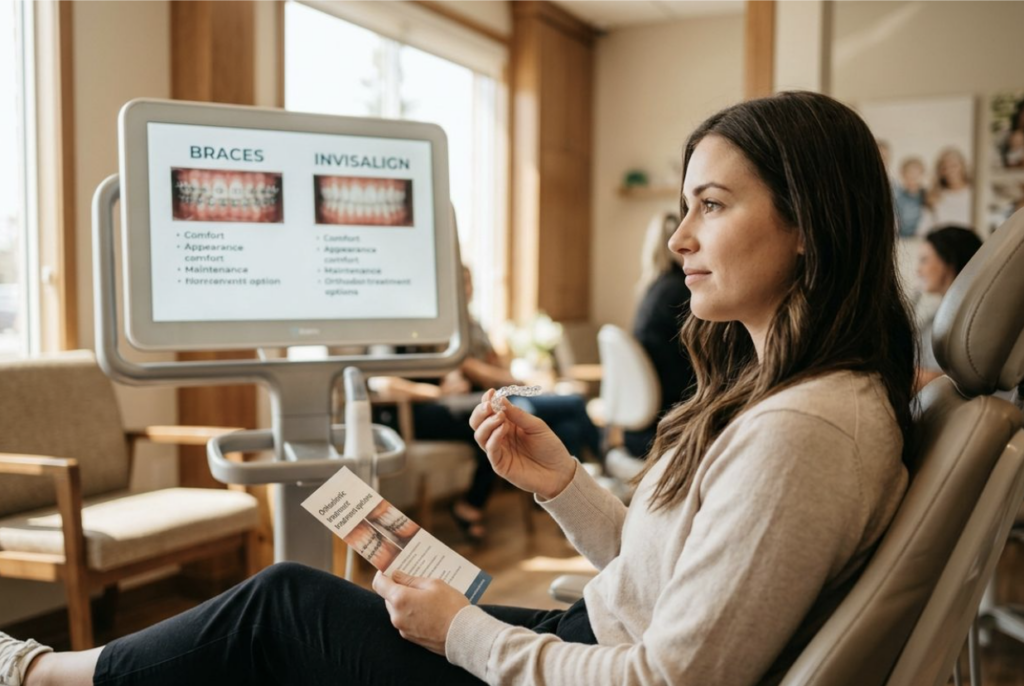
Beyond cost, the two options feel very different day to day. Invisalign uses a series of clear, removable aligners. You take them out to eat, brush, and floss. Braces are fixed to your teeth and adjusted at each visit until treatment is done.
A few practical differences worth noting:
- Invisalign requires fewer office visits and is nearly invisible when worn
- Braces need more frequent adjustments and stay on throughout treatment
- Invisalign treatment typically runs 12 to 18 months; braces often take 18 to 24 months
Hidden & Ongoing Costs Worth Knowing About
Costs That Can Add Up Over Time
The quoted price isn’t always the full picture. A few extra costs are worth building into your budget from the start so there are no surprises later.
- Retainers are needed after both treatments and typically cost $100 to $500
- Replacement Invisalign aligners, if lost or damaged, can run $100 to $300
- Emergency visits for broken brackets or wires with braces may come with added fees
Is $7,000 a Lot for Invisalign?
It can feel like a big number, but it’s not unusual for more involved cases. When a treatment requires many aligners, longer wear time, and more complex tooth movement, costs naturally climb toward the higher end of the range. Healthline’s Invisalign overview outlines what patients can typically expect from the process.
The good news is that payment plans can spread that number into manageable monthly amounts. McKenzie Towne Family Dental offers in-house payment plans with 0% interest, so higher-end treatment costs don’t have to mean putting your smile on hold.
Insurance, Payment Plans & Ways to Manage the Cost
What Your Insurance May Cover
Many Canadian dental insurance plans include coverage for orthodontic treatment. That coverage can apply to both braces and Invisalign, though the details depend on your specific plan.
- Coverage is often structured as a set dollar amount or a percentage of total treatment cost
- Some plans have a lifetime orthodontic maximum, so it’s worth confirming your limit before starting
Options If You’re Paying Out of Pocket
No insurance? That doesn’t mean orthodontic treatment is out of reach. There are a few ways to keep costs workable.
- Monthly payment plans spread your total across the length of treatment
- Health spending accounts can offset a portion of out-of-pocket costs
- A free smile evaluation lets you know the real numbers before you commit to anything
How to Choose What’s Right for Your Smile & Your Budget

Questions to Ask at Your Consultation
Going in with a few good questions makes a big difference. You’ll leave with a much clearer picture of what you actually need, not just what’s available.
- What does your specific case actually require to get results?
- Does the office use 3D scanning to map your treatment plan before it starts?
At McKenzie Towne Family Dental, the team uses iTero 3D scanning for orthodontic treatment. That means no messy impressions, and your aligners are mapped to a precise digital image of your mouth. It also means fewer visits and a treatment plan that fits your teeth from the start.
What Makes Each Option Worth It
Neither choice is universally better. Each one has real strengths depending on your situation.
- Braces can handle complex cases reliably and often come in at a lower starting cost
- Invisalign is discreet, removable, and tends to move faster for mild to moderate cases
- Both can deliver solid results when matched to the right person and case
The right call is the one that fits your teeth, your lifestyle, and your budget. That’s exactly what a proper consultation helps sort out. The Cleveland Clinic’s orthodontics guide is also a helpful resource if you want to go deeper on how treatment options are typically matched to different needs.McKenzie Towne Family Dental offers complimentary smile evaluations with no obligation, so you can get a real cost estimate and ask every question before making any decisions. To book yours, reach out to the team at McKenzie Towne Family Dental in Calgary today.