

Key Takeaways
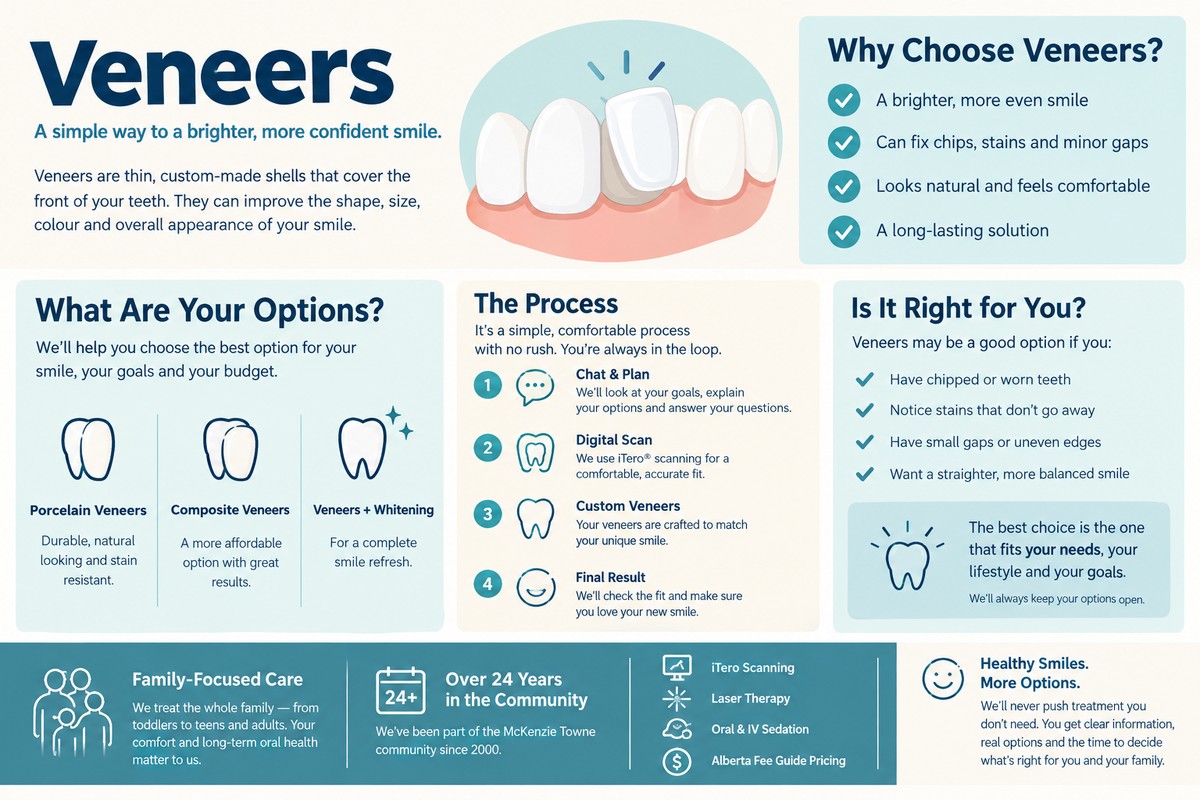
- Porcelain veneers typically last 10 to 15 years; composite veneers last around 5 to 7 years.
- Grinding, hard foods, and skipping dental visits can shorten veneer lifespan.
- Chips, discolouration, or looseness are signs your veneers may need attention.
- Soft brushing, careful flossing, and a night guard can help protect your veneers.
- Replacement is typically done over a couple of visits.
You’ve invested in your smile, and the last thing you want is to wonder how long that investment is actually going to hold up. Whether your veneers are brand new or a few years old, it’s a fair question to ask. McKenzie Towne Family Dental understands that, and the team is always happy to talk through what you can realistically expect from your porcelain veneers and how to keep them looking their best.
Veneers can last anywhere from 5 to 15 years or more, depending on the material used and how well you care for them. Knowing what affects their lifespan helps you get the most out of them for years to come.
Porcelain vs. Composite Veneers: How Long Each Type Lasts
Porcelain Veneers
Porcelain veneers are the longer-lasting option. Most people can expect them to hold up for 10 to 15 years, and sometimes longer with good care. Porcelain closely mimics the look of natural enamel and resists staining well, so your smile tends to stay looking fresh over time.
Composite Veneers
Composite veneers are a more affordable starting point, but they do come with a shorter lifespan. Most last around 5 to 7 years before they need attention. They’re also more prone to picking up stains from coffee, tea, and other foods over the years. That said, they can still be a great fit depending on your goals and budget. You can learn more about how composite resin holds up over time to help weigh your options.
What Affects How Long Your Veneers Last
Even a well-placed veneer can wear down faster than expected if certain habits are in the picture. A few of the most common culprits include:
- Grinding or clenching your teeth puts repeated pressure on veneers and can cause them to crack or loosen over time.
- Biting into hard foods like ice, hard candies, or crusty bread pushes veneers past what they’re designed to handle.
- Skipping regular dental visits means small issues like a slight crack or shifting fit go unnoticed until they become bigger problems.
The good news is that most of these are manageable once you know what to watch for. Bruxism, or teeth grinding, is one of the more common reasons veneers wear down ahead of schedule, and it’s worth discussing with your dentist if you think it might apply to you.
Signs Your Veneers May Need Replacement
Veneers don’t usually fail all at once. More often, you’ll start to notice small changes that are worth bringing up at your next appointment. Keep an eye out for:
- Visible chips, cracks, or a surface that looks dull instead of smooth.
- Discolouration or staining along the edges where the veneer meets the tooth.
- A veneer that feels slightly loose, or gum recession near the veneer margin.
None of these mean something has gone seriously wrong. They’re just signals that it’s time to have a dentist take a look. Your regular checkup is a good opportunity to catch these early.
How to Get More Years Out of Your Veneers
Daily Habits That Help
Your daily routine plays a bigger role in veneer longevity than most people realize. Two simple habits make a real difference:
- Brush twice a day using a soft-bristled, non-abrasive toothbrush. Rough bristles can scratch the surface of veneers over time.
- Floss carefully around veneer edges each day to keep the gum line healthy and the bond strong.
Habits Worth Dropping
A few small changes can go a long way. Try to stop using your teeth to open packaging, tear tags, or bite your nails. Those quick moments add up. If you know you grind your teeth at night, asking about a custom night guard is one of the smartest moves you can make for your veneers. A well-fitted guard takes the pressure off your veneers while you sleep, and that can add real years to their lifespan.
What the Veneer Replacement Process Looks Like
If your veneers do reach the end of their lifespan, replacing them is a manageable process. Here’s what to expect:
- The old veneer is gently removed and the tooth underneath is assessed to make sure it’s healthy before moving forward.
- A new veneer is created and carefully fitted to match the look and feel of your smile.
- The final veneer is placed at a follow-up visit, and you leave with a refreshed result.
Many people find the process more manageable than they expected. If dental anxiety has ever held you back, the team also offers sedation options to help you feel comfortable from start to finish.
At McKenzie Towne Family Dental, the team takes time to walk you through every option so you always know what’s happening and why. If you have questions about your veneers or want to explore a complimentary smile evaluation, reach out to your trusted McKenzie Towne Dental Calgary team today. There’s no pressure, just a conversation about what works best for you.