


Key Takeaways
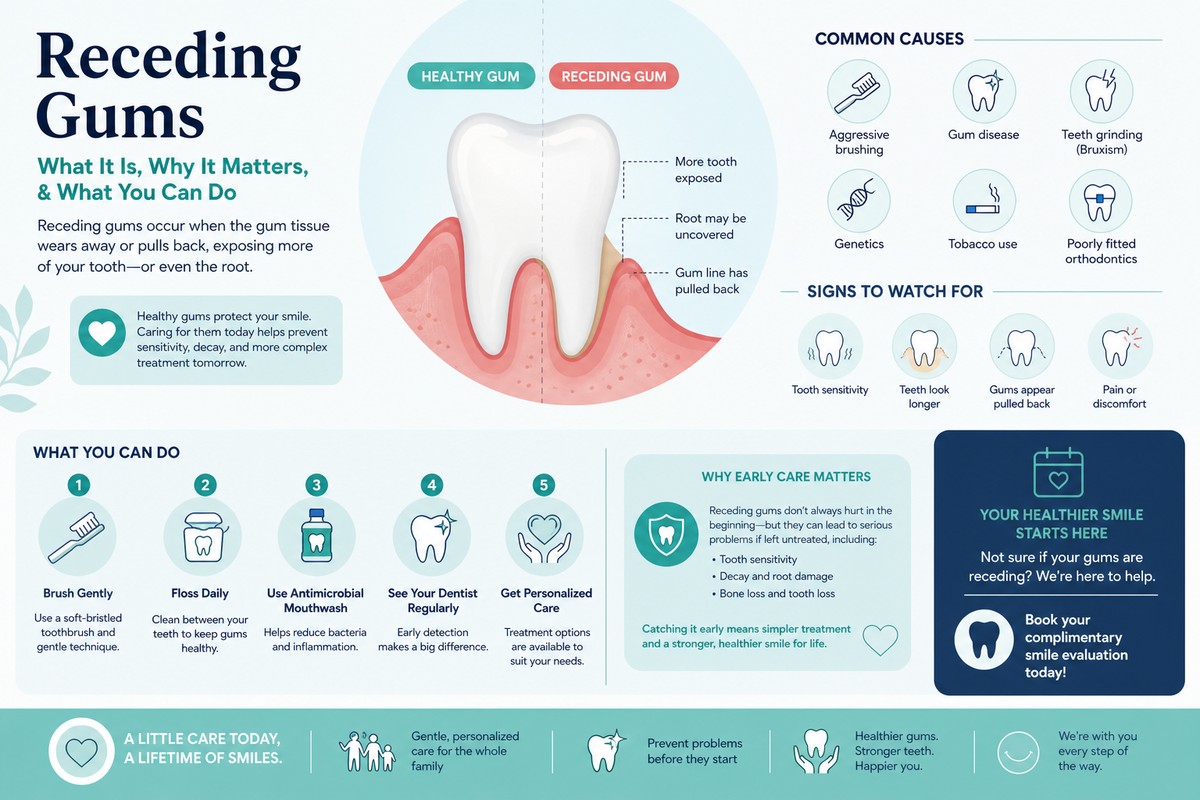
- Receding gums expose tooth roots, causing sensitivity and longer-looking teeth.
- Brushing too hard, gum disease, grinding, and genetics are common causes.
- Lost gum tissue does not grow back on its own, but treatment can slow or stop recession.
- Non-surgical and surgical options are available depending on how far the recession has progressed.
- Daily habits and regular dental visits help protect your gums long-term.
Receding Gums Can Be Managed
Maybe your teeth look a little longer than they used to. Or maybe your gums feel tender, or cold water suddenly makes you wince. It’s easy to brush these discomforts off, but they can also be early signs that your gums are pulling back from your teeth. Our team at McKenzie Towne Family Dental sees these kinds of issues often, so we know how much early attention can do for your long-term gum health.
Receding gums can be slowed, managed, and treated, but the sooner you act, the more options you have. If you’re already noticing the signs of receding gums, we’ll go over your options from start to finish.
What Receding Gums Actually Look Like
Gum recession is usually gradual, and the signs can often be explained away. Common symptoms include:
- Teeth that appear longer than usual
- Sensitivity to hot and cold
- Visible tooth roots or gums that feel tender and bleed easily
If any of these sound familiar, it’s worth getting your gums checked out. Catching recession early gives you more treatment options and helps protect the roots of your teeth before damage progresses.
What Causes Gums to Recede
Habits That Wear Gums Down
Some of the most common causes of gum recession come down to everyday habits you might not think twice about. These include:
- Brushing too hard or using a stiff-bristled toothbrush
- Smoking or chewing tobacco, which reduces blood flow to gum tissue
- Grinding or clenching your teeth, which puts repeated pressure on the gumline over time
The good news is that you can change your habits. For instance, switching to a soft-bristled toothbrush and gentler pressure can make a big difference. If teeth grinding is a factor for you, a custom night guard for bruxism can take the pressure off your gums while you sleep.
Health & Structural Factors
Sometimes the cause of gum recession has less to do with what you’re doing and more to do with what’s happening underneath. Possible culprits include:
- Gum disease from plaque buildup that irritates and breaks down gum tissue
- Misaligned teeth that create uneven pressure on certain areas of the gum
- Genetics, hormonal changes, or conditions like diabetes that affect gum health
You can do everything right and still experience recession if your body or bite is working against you. That’s why a personalized assessment matters.
Can Receding Gums Grow Back?
This is one of the most common questions people have, and the honest answer is no. Gum tissue does not grow back on its own.
That said, treatment can do a lot. Catching recession early can slow or stop it from getting worse. Professional care can also help cover exposed roots and reduce sensitivity.
The goal isn’t to pretend that recession didn’t happen. It’s to protect what you still have and improve how things look and feel going forward. Waiting tends to shrink your options, so timing is really important. Learning how to prevent gum infections from taking hold is one of the most useful things you can do in the meantime.
Treatment Options for Receding Gums
Non-Surgical Approaches
Depending on how much recession has occurred, your dentist may recommend starting with a non-surgical approach.
- Deep cleaning, called scaling and root planing, removes buildup from below the gum line and smooths the root surface to support healing around the teeth
- Tooth-coloured bonding material can be applied over exposed roots to reduce sensitivity and improve appearance
- Orthodontic treatment can shift misaligned teeth and reduce uneven pressure on the gums
Scaling and root planing is often the first step for patients with recession tied to gum disease. This approach can help reduce inflammation and support healthier gum attachment when periodontal disease is addressed early.
Surgical Solutions
For more significant recession, your dentist may discuss surgical options or refer you to a periodontist. Depending on your case, options may include:
- Gum grafting, where tissue is taken from the roof of your mouth and placed over the exposed root
- The pinhole technique, a less invasive method that repositions existing gum tissue without a graft
- Recovery time varies by procedure and by the extent of treatment
Your dentist will walk you through which option fits your situation and whether treatment can be handled in-office or with a specialist referral. The best choice depends on the cause of the recession, how much tissue has been lost, and your overall gum health.
How to Protect Your Gums Going Forward
Daily Habits That Make a Difference
After treatment, protecting your gums comes down to consistency at home.
- Brush gently twice a day using a soft-bristled toothbrush
- Floss daily and use a mouthwash that supports gum health
Small changes add up. Gentle brushing and regular flossing take the same amount of time as aggressive brushing, but they’re far kinder to your gum tissue over the years. For a deeper look at daily routines that support gum health, our oral hygiene education page walks you through what a solid home routine looks like.
Professional Support at McKenzie Towne Dental
Your at-home routine works best when it’s backed up by regular professional care.
- Routine cleanings help catch early signs of recession before they progress
- A dentist can build a care plan that fits your specific needs, not a one-size-fits-all approach
- Night guards for grinding and desensitizing treatments are available for patients who need added protection
McKenzie Towne Family Dental has been caring for families in Southeast Calgary for over 24 years. Our team takes the time to explain what’s happening with your gums and what your options are, so that you know what you’re agreeing to before any treatment begins.
If you’ve noticed the signs of receding gums, reaching out sooner rather than later can help protect your gum tissue and overall oral health. Book a visit with our team at McKenzie Towne Family Dental today and get a clear picture of where your gum health stands.